
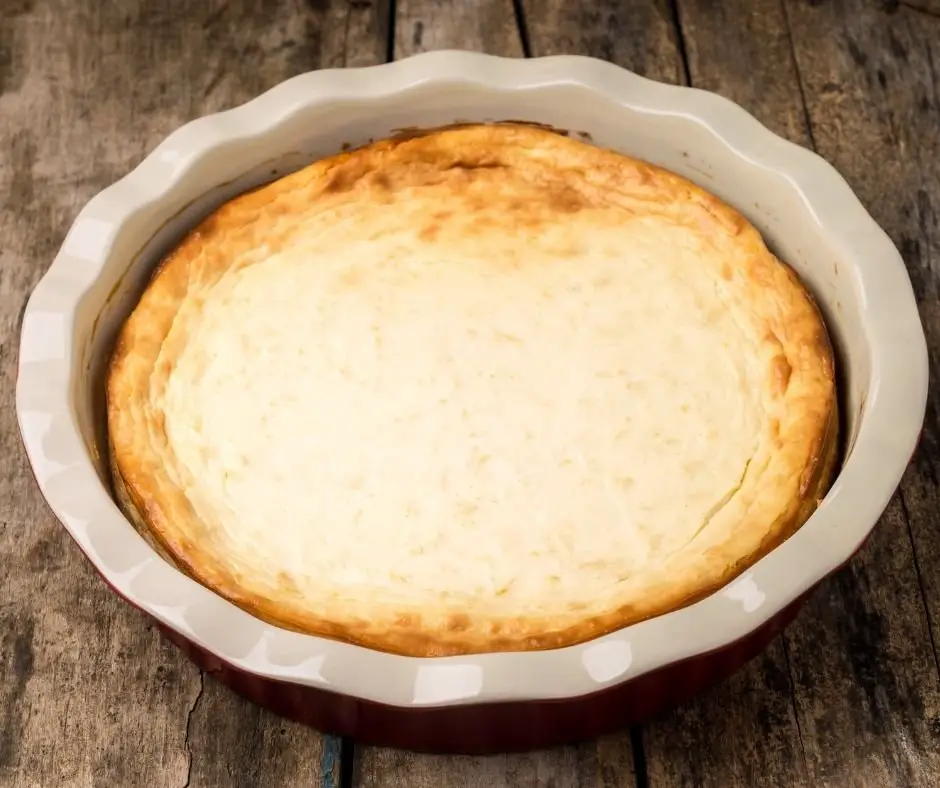
Knowing when to take a cheesecake out of the oven is easily the hardest part of making one. Unlike a normal cake, it is not supposed to look completely set when it comes out, and that catches a lot of people out.
So, let us go through what you should actually be looking for.
How Jiggly Should A Cheesecake Be When It Is Done?
So, this is the classic test, and it works well once you know what you are aiming for. First, look at the outer edge. It should be set, right up to about an inch from the side of the pan. We go into this further in how jiggly a cheesecake should be. But, the middle, a circle roughly two to three inches across, should still wobble like jelly when you give the pan a gentle nudge.
Now, if that middle looks firm and dry, we are sorry to say it, but the cake is already overbaked. It will carry on cooking from its own heat for a while after it leaves the oven, and that wobbly center is exactly what sets into a smooth, creamy texture as it cools.
Can You Use A Thermometer Instead?
You can, and honestly, we think it is the most reliable method of all if you own one. Slide an instant-read thermometer into the middle of the cake and look for around 150°F, which is about 65°C.
Just do not go much past that. Above roughly 160°F, the egg proteins tighten up too much, and that is what gives you cracks on top and a grainy texture underneath instead of something silky.
Why The Toothpick Test Does Not Work Here
Now, everybody reaches for a toothpick out of habit, but cheesecake is not a sponge cake. A normal cake sets because of starch, so a clean toothpick tells you it is baked through. But, cheesecake sets because of eggs and cream cheese instead.
So, by the time a toothpick comes out perfectly clean, the proteins have already gone well past where you want them. In other words, a clean toothpick is not good news. It means you have overdone it.
What Happens If You Overbake It?
Well, the eggs lose moisture, tighten, and start to curdle. Then, you end up with a texture that is grainy or crumbly rather than smooth, and often a slightly sour, sharper taste as well.
It is still perfectly safe to eat, so do not throw it out! But it will not have that dense, silky quality that makes a cheesecake worth the effort in the first place.
How Long Before You Can Cut It?
Longer than you would like, unfortunately. Give it an hour in the switched-off oven with the door propped open, then let it come down to room temperature on the counter. After that it needs at least four hours in the fridge, and overnight is genuinely better.
We know that is a lot of waiting. But a cheesecake that goes into the fridge warm will sweat, and one that gets cut too early will not hold its shape. So, bake it the day before if you possibly can.
Watch This Video:

Sam is an experienced pastry chef and baking enthusiast who loves to create delicious desserts. Born and raised in a small town, Sam grew up with a deep appreciation for the simpler things in life, including cooking and baking. After graduating from culinary school, Sam began working in a number of bakeries and restaurants, honing her craft and perfecting her recipes.